

A cozy guide to European Christmas food traditions, from Bulgarian rituals to German markets, Maltese pastries, Portuguese classics, and Balkan winter dishes.
How Europe Tells Its Story Through Christmas Food
Every European country has its own rhythm when December arrives.
In some places, the season is lively and festive, with Christmas markets shining under warm lights and the smell of mulled wine in the air. Elsewhere, things are quieter as families come together at home to make simple dishes, light candles, and follow traditions handed down over time. Across Europe, winter tends to slow life down, and during this pause, food becomes a way for people to show care, remember, and feel connected.
After living in Bulgaria, Malta, and Germany, and traveling through Europe, I’ve noticed something quietly special:
If you want to feel the heart of a European country, spend Christmas there — or taste its Christmas food.
Holiday dishes show how a culture values family, generosity, resilience, and the comfort of winter traditions. Some meals are about abundance, while others focus on simplicity. Many mix religious customs with older rituals. All of them share something genuine and personal about the people who make them.
This guide invites you on a relaxed, cozy journey through Europe’s Christmas foods. It’s not about the busy, commercial side of the holiday, but the gentle, meaningful version. Think of the smell of roasted chestnuts, fresh bread, warm spices, and homemade desserts cooling by the window. It’s a softer, more personal Christmas, closely tied to each place—my favorite kind.
Let’s begin.

Christmas Food in Bulgaria — Symbolism, Warmth & Tradition
Bulgaria celebrates Christmas in a way that feels deeply spiritual and beautifully simple. The holiday unfolds over two days, each with its own meaning. Christmas Eve features humble, symbolic dishes. Christmas Day brings warm, comforting flavors. Together, they reflect Bulgarian food culture: respect for tradition, gratitude for the past year, and quiet hope for the next.
Quiet Rituals of Christmas Eve (Бъдни вечер)
Christmas Eve in Bulgaria is one of the most meaningful nights of the year — a gentle, candlelit moment that honors family, memory, and the comfort of simple food.
A fully plant-based table
The whole meal is plant-based (постна храна), with no meat, dairy, or eggs. This tradition stands for humility and preparation, offering a thoughtful pause before the festive abundance of Christmas Day.
Symbolic dishes that carry centuries of meaning
Each dish placed on the Christmas Eve table has a purpose:
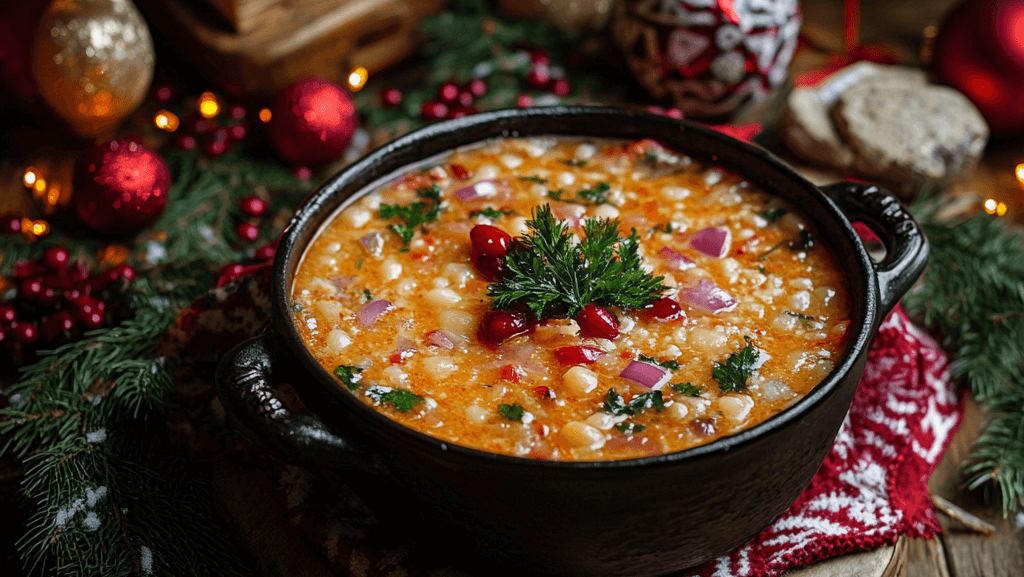
- bean stew — abundance and nourishment
- stuffed peppers with rice — warmth and home
- sarmi (cabbage or vine leaves) — protection and family unity
- pumpkin strudel (tikvenik) — health and prosperity
- ritual round bread with a hidden coin — good luck for the new year
- walnuts — cracked to reveal one’s fortune
- dried fruit compote (oshav) — connection to tradition and winter preservation
These dishes are simple, nourishing, meaningful, and closely tied to the land.
The meaning of 7, 9, or 12 dishes
Families prepare an odd number of dishes:
- 7 — the days of the week
- 9 — the months of pregnancy
- 12 — the months of the year
Each number represents cycles, continuity, and renewal.
A table prepared with intention
Traditionally, a woven tablecloth is used, straw is sprinkled on the table to represent the manger, and walnuts, beans, dried fruits, and bread are placed on it. The table is left overnight to honor ancestors and invite blessings. This night is gentle and symbolic, celebrating stillness, gratitude, and the quiet warmth of winter.
If you want to learn more about traditional Bulgarian Christmas Eve dishes, check out my detailed post.
Christmas Day Favorites
On Christmas morning, the atmosphere shifts completely. The quiet reflection of the night before opens into warmth, laughter, and a table rich with festive dishes. Meals become hearty and celebratory — a joyful contrast to the simplicity of Christmas Eve. Classic Christmas Day dishes include pork with sauerkraut, kavarma, roasted meats, homemade sausages, baklava, or garash cake. Where Christmas Eve honors tradition and humility, Christmas Day celebrates abundance, family, and togetherness. It’s a beautiful balance — one of the reasons Bulgarian Christmas feels so meaningful.
What to Try If You’re Visiting Bulgaria During the Holidays
If you’re spending December in Bulgaria, Christmas food is one of the most meaningful ways to understand the culture. Even outside the holiday itself, many restaurants serve traditional winter dishes that offer a glimpse into Bulgarian family traditions.
Here are a few cozy, local-approved foods to look for:
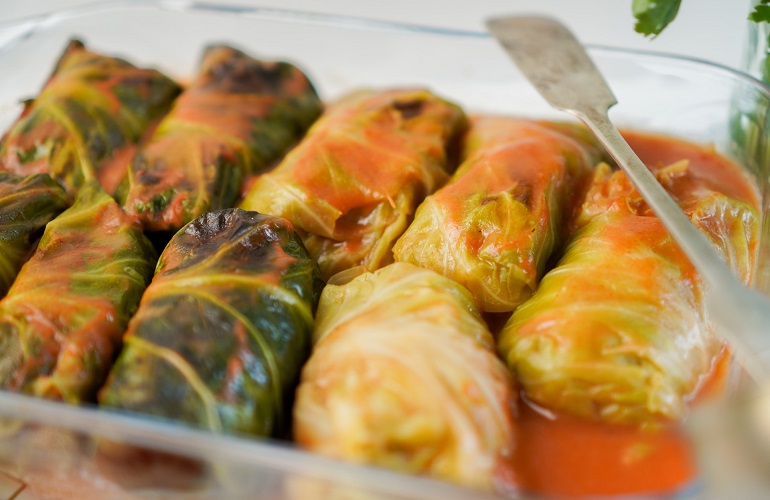
✔ Sarmi (Stuffed Cabbage or Vine Leaves)
Served throughout winter, sarmi are tender, aromatic, and deeply comforting. Look for plant-based versions (for a taste of Christmas Eve traditions) or meat versions (usually served on Christmas Day or New Year’s Day). Soft, warm, and full of flavor — a true Bulgarian treasure.
✔ Bean Stew (Bob Chorba)
This simple dish is found on many Christmas Eve tables. It’s hearty, comforting, and seasoned with savory herbs like chubritsa. It’s perfect for cold December days.
✔ Tikvenik (Pumpkin Strudel)
This warm, fragrant pastry is filled with pumpkin, cinnamon, walnuts, and a touch of sweetness. It evokes the cozy feeling of a Bulgarian winter.
✔ Pork with Sauerkraut
This Christmas Day favorite is slow-cooked, rich, and very satisfying. It’s a nice contrast to the gentle plant-based dishes of Christmas Eve.
✔ A Glass of Bulgarian Wine — Mavrud or Melnik
Both wines pair beautifully with winter dishes:
- Mavrud — bold, full-bodied, perfect with roasted meats
- Melnik — warm, earthy, soft
Enjoying a local wine brings extra warmth to the holiday experience.
Christmas Food in Germany — Markets, Comfort & Winter Classics
Germany might be the country most closely associated with the cozy charm of Christmas.
When December begins, German cities become islands of warmth, with glowing stalls, old-town squares lit up, and comforting smells in the cold air. I love walking through a German Christmas market, where the scent of roasted nuts and mulled wine fills the air. Vendors make simple, traditional foods that people have enjoyed for generations. Friends and families gather, holding warm drinks, sharing pastries and sausages, and soaking in the gentle pace of winter. Christmas food in Germany is not just about markets—it’s also about cozy home traditions, simple Christmas Eve meals, and festive dishes on Christmas Day.
Here’s a slow, food-first look into the flavors that define German Christmas — familiar, comforting, and full of winter warmth.
Iconic Christmas Market Foods
German Christmas markets are a place where winter feels soft and warm despite the cold. Walking through the stalls, the scents come first: roasted nuts, sizzling sausages, spicy mulled wine, buttery baked goods.
Here are the classics you’ll see at almost every market:
✔ Gebrannte Mandeln (Candied Almonds)
Warm, sweet almonds caramelized with sugar, cinnamon, and a hint of vanilla. They’re served in paper cones and are often the first scent that greets you when entering a market. Eating them slowly as you walk among the stalls is a small, comforting ritual.
✔ Bratwurst
Grilled over an open flame and served in a crusty bun, bratwurst has a smoky aroma that’s especially inviting on cold December nights. It’s perfect for warming both your hands and your stomach.
✔ Kartoffelpuffer (Potato Pancakes)
Crispy on the outside, soft inside. Served with applesauce or sometimes sour cream (my favorite). It’s a humble winter dish, deeply satisfying and loved by locals and visitors alike.
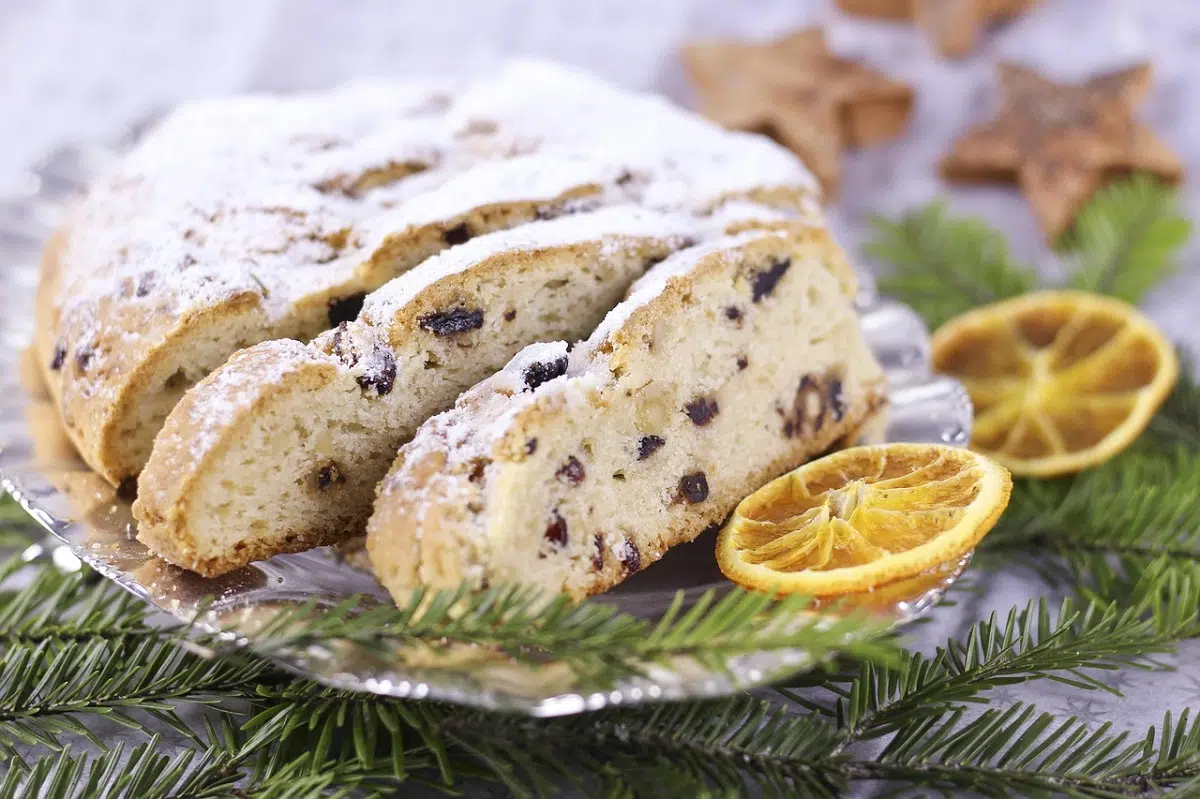
✔ Stollen
This dense, buttery fruit bread is covered with powdered sugar. Inside, there are dried fruits, nuts, spices, and sometimes marzipan. Every bite tastes like Christmas—nostalgic, rich, and comforting.
✔ Lebkuchen
Soft gingerbread cookies flavored with honey, nuts, and warm spices. Often decorated or sold in large heart shapes with messages written in icing. They’re a classic German symbol of holiday sweetness.
✔ Glühwein (Mulled Wine)
Warm red wine is mixed with cinnamon, cloves, and citrus. It’s the drink everyone enjoys while walking through the markets—a true winter companion. You’ll also find versions like white glühwein, cherry glühwein, or glühwein with amaretto for extra warmth.
Christmas Eve vs. Christmas Day Traditions
Germany’s holiday traditions reflect a beautiful balance between simplicity and festivity.
Christmas Eve (Heiligabend)
Meals are often intentionally simple, such as potato salad, sausages, bread, and cold dishes. Families focus on togetherness rather than elaborate cooking.
Christmas Day (Weihnachten)
The next day is all about abundance, with roasted meats, rich sauces, and comforting winter dishes like roast goose, duck, carp, red cabbage, and dumplings.
The contrast makes the holiday feel layered, thoughtful, and deeply rooted in tradition.
A Cozy Insight from Life in Germany
Living in Germany helps you notice the quiet beauty of winter. December evenings became my favorite time—walking into a Christmas market after lessons, enjoying the glow of lights, and holding a cup of Glühwein in cold hands.
These moments aren’t just for tourists—they’re local traditions. Friends meet after work, couples stroll, and families enjoy simple foods together. German Christmas markets aren’t about show; they’re about being present and enjoying the simple joy of winter, surrounded by warmth, scents, and tradition.

Christmas Food in Malta — Mediterranean Warmth & Catholic Tradition
Christmas in Malta carries a different kind of winter magic.
While much of Europe celebrates with cold evenings, snowy markets, and hearty dishes, Malta offers a softer, brighter version of the season — shaped by Mediterranean sunshine, Catholic traditions, and comforting baked foods that fill homes with warmth. Here, Christmas is less about heavy winter meals and more about togetherness, slow family lunches, and desserts flavored with citrus, honey, and dates. Maltese Christmas food tells a story of heritage and hospitality — a blend of North African influence, European flavors, and local customs passed down over generations.
Traditional Maltese Christmas Dishes
Malta’s Christmas table blends Mediterranean warmth with homely, comforting winter flavors. Many dishes are simple, nostalgic, and deeply tied to family gatherings.
✔ Imqaret
Crispy on the outside, soft and fragrant inside — these deep-fried date pastries are a beloved Maltese treat. You’ll often see them sold warm at markets during December, their sweet aroma drifting through the air. The filling is gently spiced, rich, and familiar—a taste that feels festive from the start.
✔ Qagħaq tal-Għasel (Honey Rings)
These traditional pastries have a beautiful balance of flavors: honey, citrus zest, warming spices, and a soft, delicate sweetness. They’re usually enjoyed with tea or coffee during the holidays and appear in almost every Maltese home in December.
✔ Baked Macaroni or Timpana
Baked macaroni or timpana (a pasta pie wrapped in pastry) is a Maltese classic for big family gatherings. It’s hearty, comforting, and made to feed a crowd. This dish brings everyone together at the table—simple, satisfying, and warm.
✔ Roasted Meats
Many Maltese families make roast dishes for Christmas lunch, such as chicken, pork, and beef. These are served with potatoes, vegetables, and lots of home-style gravy—simple and very comforting.

Festive Sweets & Warm Flavors
Maltese sweets around Christmas are humble but deeply nostalgic.
You’ll find:
- Pudina — a dense, cozy bread pudding made with leftover bread
- almond cookies — soft, aromatic, and often dusted with powdered sugar
- hot drinks with spices and citrus — warm, fragrant companions for evening walks
These flavors feel deeply homely, especially during Malta’s cooler December evenings when the island becomes surprisingly cozy.
Christmas Atmosphere in Malta
Malta’s Christmas charm is gentle and intimate. Balconies are decorated with soft lights, small markets offer pastries and handmade goods, and families stroll through quiet streets with warm snacks. The atmosphere is warm and welcoming, ideal for travelers who enjoy cozy, local experiences.
Christmas Food in Portugal — Sweet Flavors and Family Gatherings
Portugal’s Christmas table reflects the country’s identity: warm, welcoming, shaped by the sea, and deeply rooted in family traditions. Here, Christmas flavors are gentle and comforting: salted cod prepared simply, hearty winter soups, golden desserts dusted with sugar, and pastries with citrus, cinnamon, and honey. Unlike northern Europe’s heavy winter dishes, Portuguese Christmas food feels lighter, brighter, and full of soft sweetness. Portugal’s holiday traditions blend simplicity and celebration in a way that feels deeply soothing, especially for slow travelers and food lovers.
Classic Portuguese Christmas Dishes
Portugal’s Christmas dishes balance simplicity, comfort, and a deep sense of tradition. They’re foods that bring families together — warm, familiar, and full of meaning.
✔ Bacalhau da Consoada
Salted cod is a key part of Portuguese cooking, and on Christmas Eve, it’s the main dish. It’s served with boiled potatoes, cabbage, carrots, and plenty of olive oil. This humble meal is very comforting, and its simplicity matches the quiet, thoughtful spirit of Christmas Eve in many Portuguese homes.
✔ Caldo Verde
A cozy kale-and-potato soup, smooth and soothing. It is often enjoyed throughout December and makes the perfect warm-up on cold evenings.
✔ Roupa Velha
Meaning “old clothes,” this dish transforms the leftovers of Christmas Eve’s cod into something new and flavorful. The shredded cod, potatoes, and vegetables are lightly sautéed, creating a simple meal that feels both practical and delicious. It’s a beautiful reminder of how Portuguese cuisine honors tradition without waste.
Desserts You’ll See Everywhere
Portugal’s holiday sweets are some of the most beloved in Europe — fragrant, golden, and full of warm spices and citrus notes.
✔ Bolo Rei (King Cake)
Bolo Rei is a festive, crown-shaped cake topped with nuts, raisins, and candied fruit. It’s soft inside, a little crunchy on top, and often served with afternoon coffee during the holidays.
✔ Rabanadas
Rabanadas are Portuguese-style French toast, soaked in milk, lightly fried, and sprinkled with cinnamon and sugar. They’re warm, sweet, and nostalgic—a dessert that fills the home with the scent of Christmas.
✔ Pastéis de Nata
Pastéis de Nata aren’t just for Christmas, but they’re enjoyed all season. The flaky pastry and creamy custard filling go perfectly with a hot drink on a winter evening. They’re one of my favorite desserts.

A Slow-Travel Moment in Portugal
Portugal encourages you to slow down, especially during the holidays. Even in busy cities like Lisbon or Porto, December evenings are soft and relaxed, with streets glowing from gentle holiday lights. These simple moments capture the quiet charm of Christmas in Portugal, where warmth comes from both the food and the welcoming atmosphere.
Balkan Christmas Traditions — Heart, Heritage and Simple Ingredients
Christmas in the Balkans has a feeling that’s easy to recognize, even though traditions differ from country to country. Winter food here is based on comforting ideas: simple ingredients, meaningful rituals, family warmth, and recipes made the same way for generations.
Here, Christmas is not defined by extravagance — it is defined by intention. Tables are filled with slow-cooked stews, breads that carry hidden fortunes, dishes made from preserved winter vegetables, and recipes passed down quietly through families. Even though the Balkans include a wide mix of cultures, religions, and histories, the Christmas season shares a familiar rhythm everywhere: simplicity, togetherness, and a deep respect for tradition.
Let’s look at some of the flavors and rituals that make the Balkan holiday table so special.
Serbia, North Macedonia, Bosnia — Shared Roots
Across Serbia, North Macedonia, and Bosnia, Christmas tables are filled with dishes that feel deeply familiar to anyone who knows Balkan cuisine. These foods are warm, slow-cooked, and made from simple ingredients that have sustained families through long winters for centuries.
✔ Sarma
A true winter essential. Sarma appears on countless holiday tables — tender cabbage leaves wrapped around rice, herbs, and either plant-based or meat fillings. Simmered slowly for hours, it becomes soft, aromatic, and comforting. Every family makes it differently, but the feeling is always the same: home.
✔ Česnica
Česnica is a traditional Serbian Christmas bread with a hidden coin inside. Whoever finds the coin is said to have good luck in the coming year. It’s very similar to Bulgarian ritual bread, showing how traditions in this region often reflect each other.
✔ Bean Dishes
Slow-cooked beans appear on holiday menus across the Balkans. They’re humble, nourishing, and perfect for cold winter days. Often flavored with paprika, onions, herbs, and sometimes smoked elements, bean dishes carry the taste of tradition.
✔ Winter Stews
Across the region, stews are a comforting part of the Christmas season. They’re made with peppers, onions, tomatoes, potatoes, and herbs — ingredients that store well through winter. Served warm and slowly simmered, these stews bring families together around the table, offering both nourishment and familiarity.

Shared Traditions Across the Region
Despite differences in cuisine and customs, many Balkan Christmas traditions overlap beautifully:
- Plant-based meals on Christmas Eve
- Symbolic breads baked with hidden coins
- Walnuts, dried fruits, and winter preserves
- Meals prepared with intention, honoring ancestors and family history
These rituals are gentle, meaningful, and deeply rooted in the land and its seasons. Even with variations from country to country, the emotional core is the same: warmth, simplicity, gratitude.
Why Balkan Christmas Tables Feel Familiar Yet Diverse
The Balkans share ingredients, climate, and cultural memory. This creates a sense of familiarity in holiday dishes — cabbage leaves, beans, stews, breads with hidden fortunes. But each country interprets these traditions in its own way. This gentle diversity makes the region feel both unified and wonderfully varied. Here, food is not only a meal — it is a story, a memory, a connection to heritage.
European Christmas Food Traditions: What They Tell Us About Europe
Looking closely at Christmas food across Europe reveals more than just recipes or holiday menus. You see how people live, gather, and what they value. Each dish, whether simple or festive, holds a quiet part of cultural identity.
✔ Christmas food reveals how people understand hospitality
Some countries show hospitality through abundance. Others through simplicity and intention. But everywhere, sharing food is an act of warmth and welcome.
✔ It shows how climate shapes winter dishes
Northern Europe prefers hearty meats, roasted foods, and warming spices. Southern and Mediterranean countries enjoy citrus, olive oil, lighter pastries, and seafood traditions shaped by the sea.
✔ It shows how religion and folklore gently merge
You’ll find pre-Christian rituals mixed with Christian symbolism. These quiet rituals reveal how old and new beliefs coexist beautifully.
✔ It shows how families preserve tradition
Across Europe, the same dishes appear on tables year after year — not out of habit, but out of love. Recipes are passed from grandparents to grandchildren, carrying memories, gestures, and flavors that feel timeless.
✔ It shows how simple ingredients can express deep meaning
Beans, cabbage, bread, dried fruits, and potatoes may seem ordinary, but at Christmas they become symbols of nourishment, gratitude, and continuity.
✔ A Shared Emotion Across the Continent
The foods may look different — from German bratwurst to Maltese honey rings to Portuguese Bolo Rei to Bulgarian sarmi — but the emotions behind them are surprisingly similar: warmth, connection, comfort, hope, the joy of gathering around a table. It’s a season of slow flavors, soft rituals, and quiet togetherness.

HAPPY HOLIDAYS!
Christmas has a quiet way of revealing the heart of a place.
You taste it in the foods that families prepare with care, in the rituals repeated year after year, and in the warmth that fills homes and streets during the darkest days of winter. Through these festive dishes — whether humble or abundant — you glimpse a country’s history, its traditions, and the way its people understand belonging.
Wherever this winter finds you — wandering through a Christmas market, stepping into a cozy bakery, or sharing a meal at a warm family table — I hope these stories and flavors help you feel a little closer to Europe. May they bring comfort, curiosity, and a sense of gentle wonder to your holiday season.
🌿 HAPPY HOLIDAYS! 🌿




0 Comments